SIMED focuses its expertise on the analysis of structural integrity problems in engineering materials and structures. Multiphysics and multidisciplinary approaches are pursued to advance understanding of material behaviour and to solve engineering challenges related to damage tolerant design and design against failure.

Fatigue and Stress analysis of materials and structures
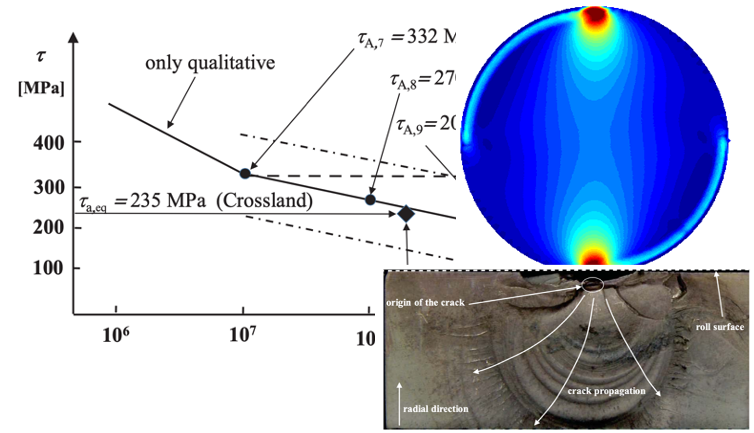
Assessment of fatigue life through stress/strain approaches using both analytical and numerical tools
Industry-oriented applications
- Thermo-mechanical fatigue assessment of components for steel making industry (anode for arc furnace, copper mould for continuous casting, work roll in hot and cold rolling mill);
- Low- and High-cycle fatigue evaluation for automotive, aerospace and biomedical applications.
- Probabilistic approaches for structural reliability
Fundamental scientific research
- Development of damage tolerant criteria for design and verification
- Microstructural aspects such as crystal orientation, phase detection, deformation mechanisms
- Biomedical studies

Residual Stress evaluation and modelling
Comprehensive analysis of residual stress origin, evaluation, uncertainty, modelling and its effect on material structural performance
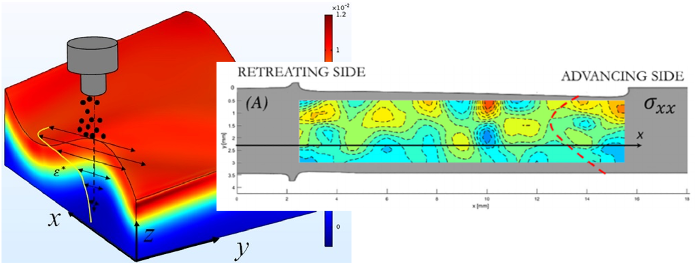
- Experimental evaluation in complex-shaped mechanical components through non-destructive and destructive techniques, e.g. Contour Method (CM), (Synchrotron and Lab) X-ray based techniques.
- Analysis of deformation processes giving rise to residual stress
- Simulation and validation of manufacturing processes affecting residual stress, e.g. rolling, forming, thermal treatment
- Accounting of residual stress in structural damaging processes
- Quantification of Uncertainties

Material modelling in multi-physics simulations
Material constitutive laws determination and calibration for several mechanical phenomena
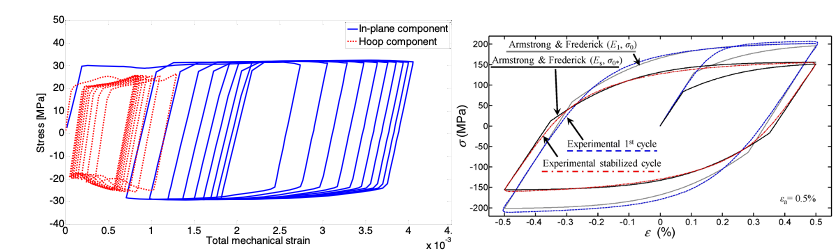
- Cyclic Plasticity
- Creep
- Thermo-mechanical problems
- Phase transformation

Fracture Mechanics
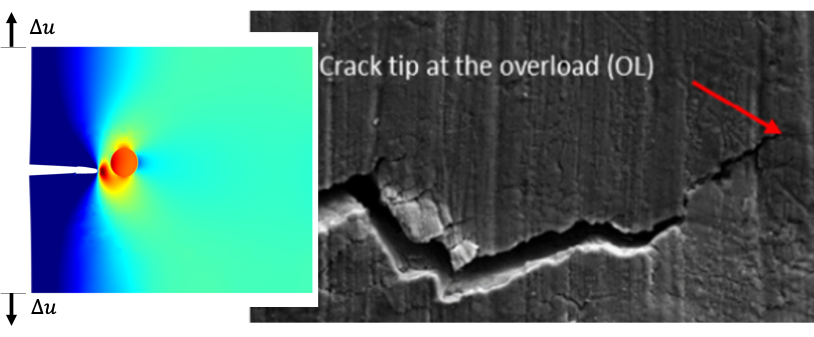
Advance understanding of crack propagation mechanisms in materials and structures
- Crack propagation simulation using numerical approaches: Phase-Field Methods (PFM), Cohesive Zone Model (CZM);
- Fundamental research on fatigue crack propagation under variable amplitude loading;
- Materials toughening mechanisms

Multi-physics simulations
Modelling and coupling physical phenomena to assess materials properties and degradation/damage
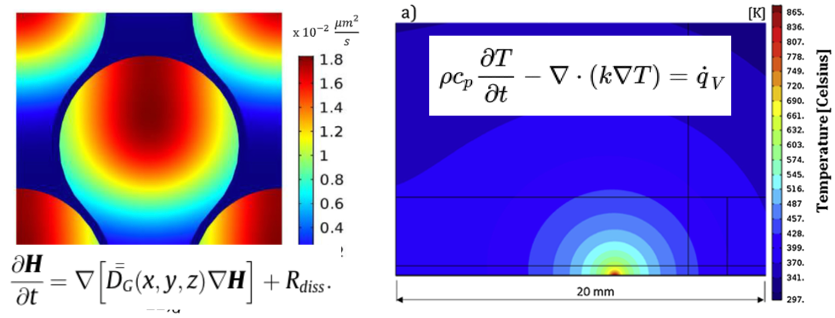
- Time-dependent PDE-driven processes (diffusion, reaction-diffusion problems)
- Physics coupling and homogenisation procedures